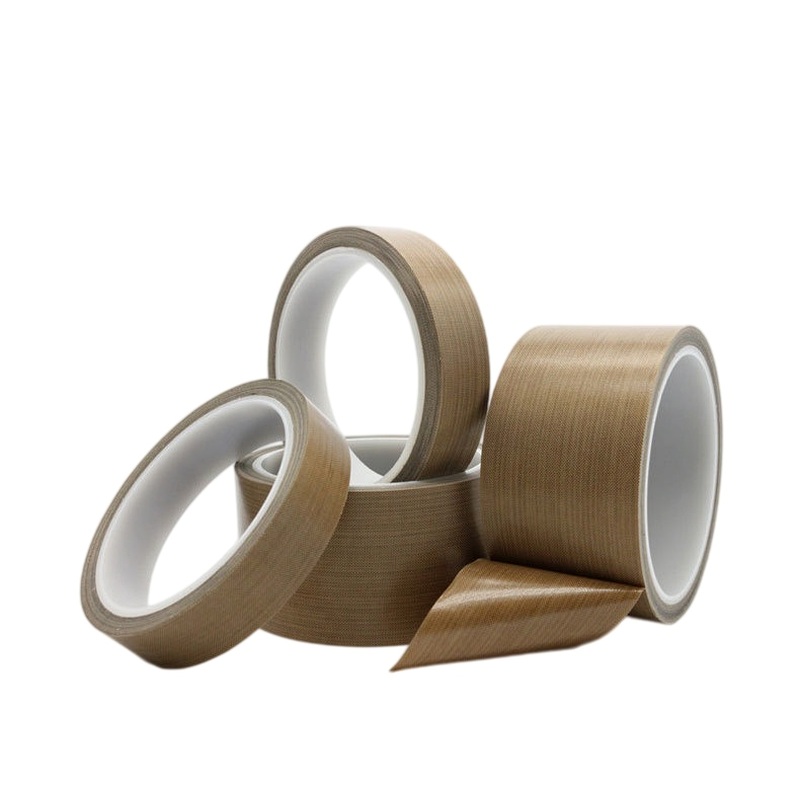
PTFE tape is used where a surface must not stick. On packaging and laminating equipment it protects the heating bar or sealing jaw, so the film, foil or laminate releases after the seal instead of wrapping around the bar. On rollers and forming tools it provides a low-friction release face. It also serves as a release surface in composite and plastics processing, and as a barrier where heat and chemical exposure would destroy an ordinary tape.
PTFE / Teflon heat sealing tape is normally supplied with a silicone adhesive so the tape itself can be bonded to a bar and replaced when worn, or without adhesive where the tape runs as a belt or a liner.
What decides the choice
The machine and the heated part. Impulse sealers, constant-heat bands, jaw sealers and roller machines load the tape differently and need different widths and thicknesses.
Whether adhesive is needed. Bars and jaws usually need adhesive-backed tape. Running belts and release liners usually do not.
Contact pressure and cycling. Repeated sealing cycles wear the surface, and the replacement interval depends on the pressure and the material being sealed.
Width and length matching the bar. A tape that is too wide creates overhang that curls. A tape that is too narrow leaves exposed bar and uneven sealing.
Chemical and temperature exposure. Some processes involve release agents, inks or solvents in addition to heat.
Formats and converting
Typical supply is a roll cut to the width of the bar, with or without adhesive, plus cut pieces for a specific jaw length. Where the tape runs as an endless belt, the length and joint need to be specified. Slitting to narrow widths and supplying matched sets for a machine is normal for this product family.
What to send for a quotation
The machine type and the part being covered: sealing bar, jaw, roller or belt.
The bar or roller dimensions: width, length, and whether adhesive backing is required.
What is being sealed: film, foil, laminate, pouch or another material.
How often the tape is replaced, if this is a repeat order.
Should I choose PTFE tape with or without adhesive?
If the tape is fixed to a sealing bar, jaw or forming tool, an adhesive-backed construction keeps it in place and makes replacement straightforward. If the tape runs as a belt, liner or release sheet, tape without adhesive is usually the right choice.
How do I know which width to order?
Measure the heated bar or jaw, including any area the previous tape covered. Ordering to the measured width avoids overhang that lifts at the edges during sealing.
Request a Quote
Inquiry type: Quotation request
If you have any questions, please do not hesitate to contact us.