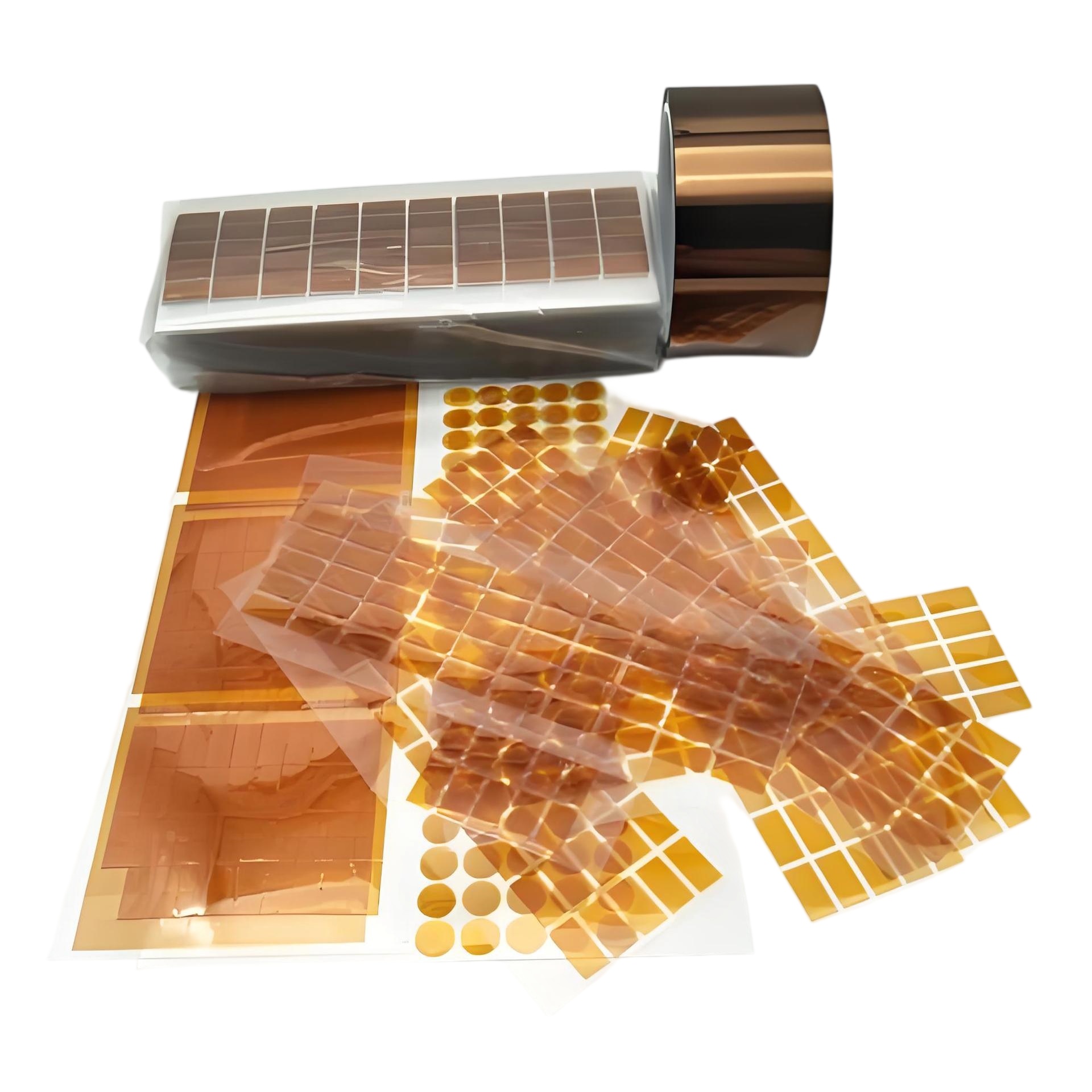
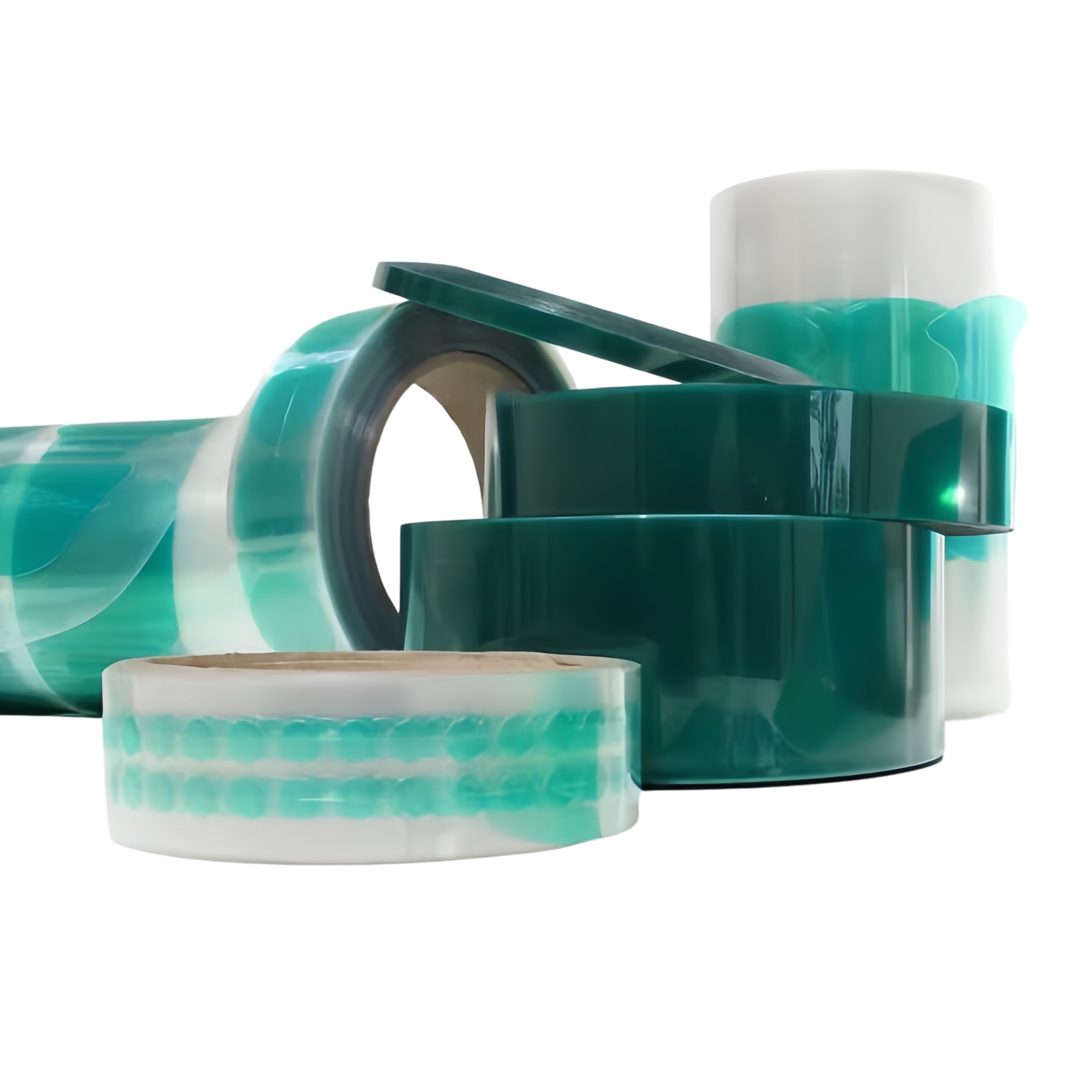
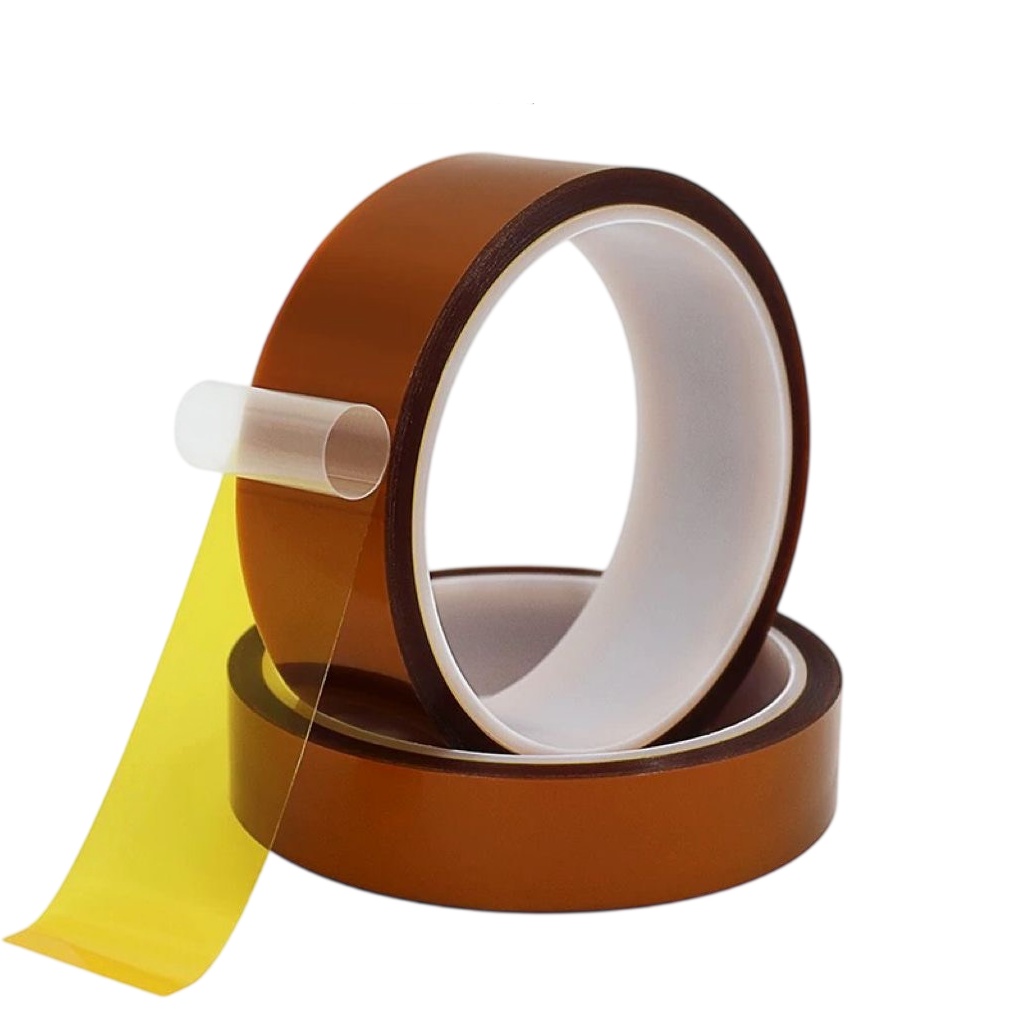
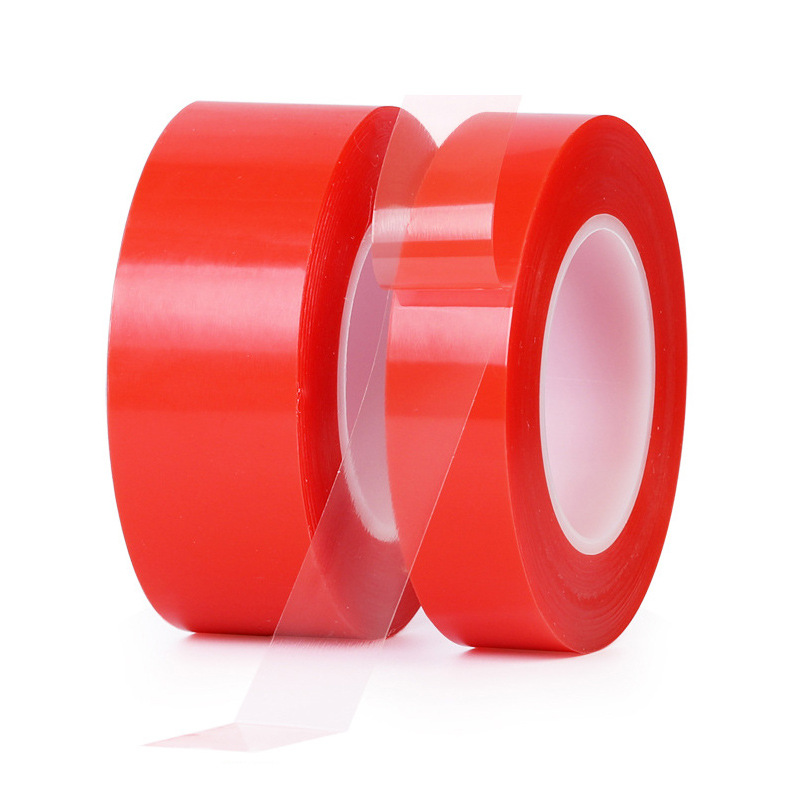
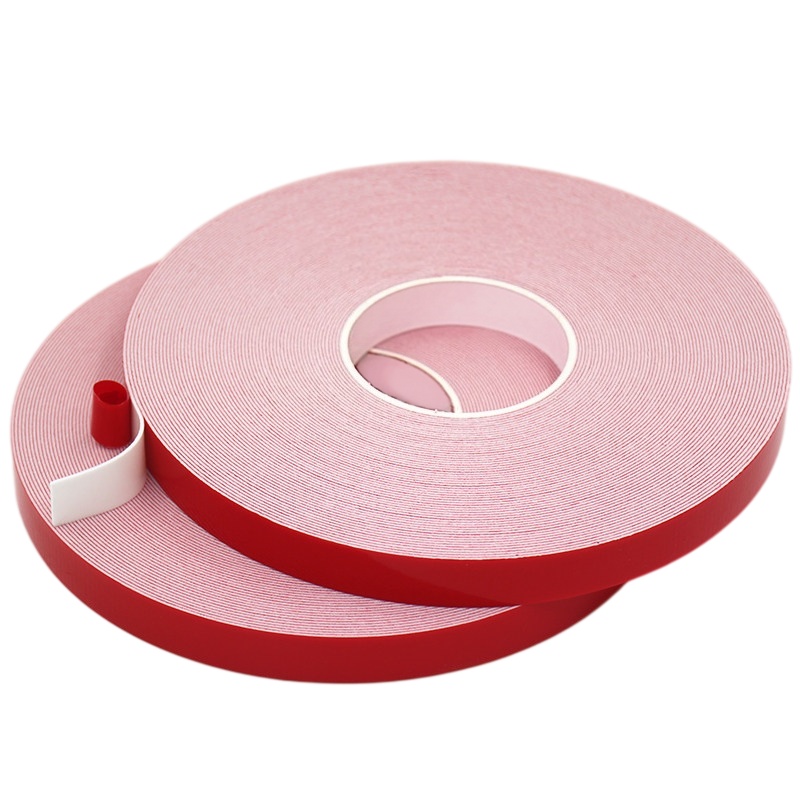
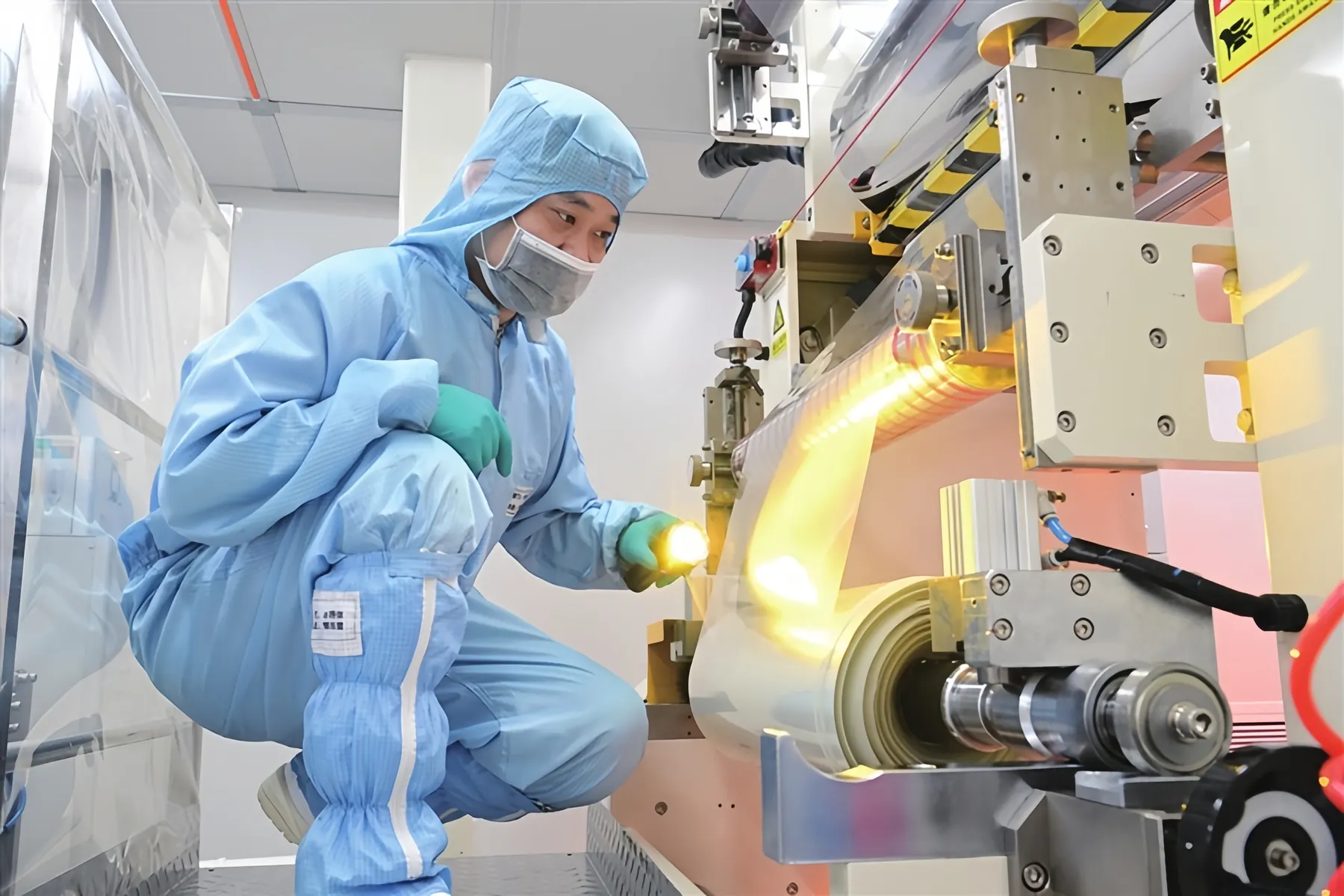
These are the materials that converters run through a die-cutting press rather than apply by hand. The tape arrives as a laminate: a carrier film or foam, an adhesive on one or both sides, and a release liner that has to stay flat and release at the right moment. The die-cut part then becomes an insulation pad, a spacer, a gasket, a bonding patch or a protective film inside another product.
Structure. Carrier material, adhesive on one or both faces, and liner type together define how the material behaves on the press and in the final part.
Total thickness. Thickness affects stiffness, handling on a high-speed press, and the gap the part has to fill.
Die-cutting method. Flat-bed and rotary cutting, kiss-cutting against a liner, and the amount of waste material all change what the laminate has to tolerate.
Bonding surface and conditions. Metal, plastic, powder-coated surfaces and low-energy plastics behave differently, and so do parts that are cleaned or baked after assembly.
Temperature in service. A part that sits near a heat source needs a carrier and adhesive chosen for that, not just the lowest-cost film.
Formats and converting
Materials can be supplied as master rolls for your own presses, as rolls wound to a specified width, core and length, or as finished die-cut parts cut to your drawing. When the material is meant for die-cutting, it helps to state the liner, the winding direction, the splice policy and the roll diameter your machine accepts, so the roll arrives ready to run.
What to send for a quotation
The drawing or dimensions of the finished part, including tolerances.
The cutting method and machine type: flat-bed, rotary, or sheet-fed.
The structure you need, or the function the part performs.
Roll width, core size, roll length and monthly quantity.
Can you supply material for our own die-cutting line?
Yes. The materials can be supplied in master or slit rolls so your own presses do the die-cutting, with the liner, width and winding set for your equipment.
What information is needed to quote a die-cut part?
A drawing with dimensions and tolerances, the cutting method, the quantity per run, and the function the part performs. If there is an existing material you are replacing, the construction or a sample helps.
Request a Quote
Inquiry type: Quotation request
If you have any questions, please do not hesitate to contact us.